Tuesday, June 21, 2016

Team Gundlachi Rides Again!

We’re baaaackkkkk! Deborah and I are back at El Verde Field Station, and gearing up for another busy field season here in the rainforest! Thus far, El Yunque is earning its rainforest title. Deborah and I have spent some very damp days chasing lizards. But, how else do you learn that Anolis gundlachi can still be caught in a torrential down pour?! Deborah leads the lizard count by a loooonnnggg shot—she’s putting me to shame!

We've got a bunch of projects on the docket, so tune back in for some (hopefully) exciting updates as our field season unfolds!

Shameless "Made-It!" Selfie
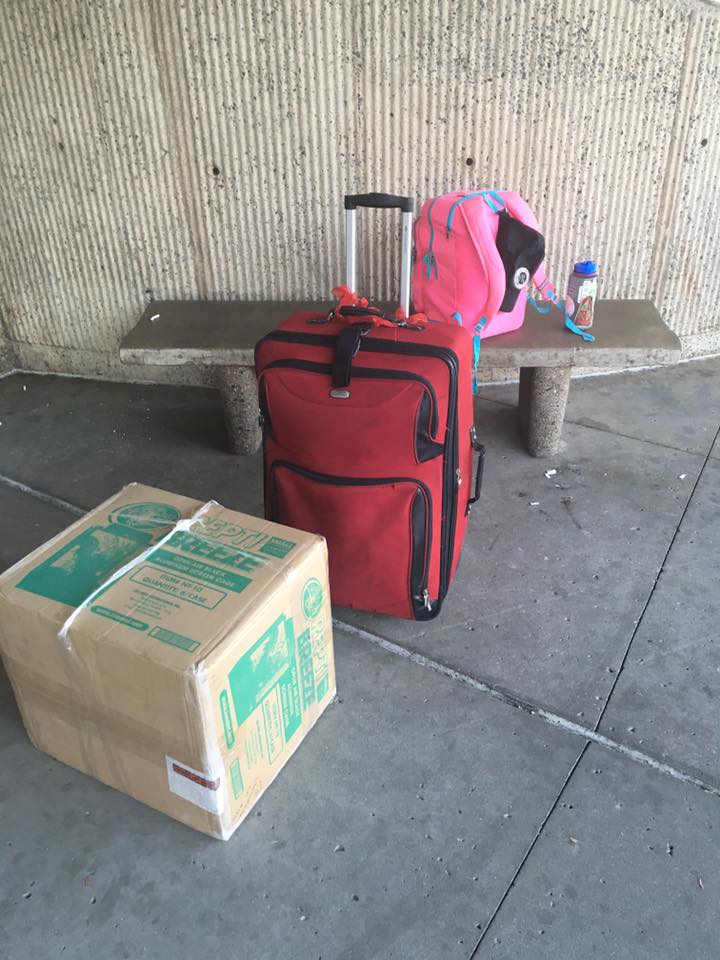
49.5 Pounds--I WIN!


Sunday, June 19, 2016

The Straw that Broke the Camel's Back

This trip has been full of setbacks, problems with the engine of the boat that kept us grounded for four days to stormy weather that make impossible to find lizards. Particularly, when you are trying to measure their body-temperature. Today all those setbacks felt like a walk in the park, compared to the one that broke the camel’s back. At 6:20am I opened the back of the minivan and saw what you see in the photo below.
WHAT THE HELL!!!!!!!
You must be wondering, what is the big deal of seeing a gas tank, well, that the engine that was next to it 10 hours before and now is missing. Correcto, un “C*B*&%” broke into the car and stole the engine. So we are again grounded and unclear that we will be back in the cays any time soon.  

Field Biologists in Training

Joshua and Will are slowly learning the tools of the trade for doing fieldwork in The Bahamas. Those trades include, a daily routine of securing The Leaping Lizard, dealing with the low tide and collecting ecological data on Anolis sagrei.
Josh and Will untying The Leaping Lizard  
Josh and Will experiencing the low tide ritual 
Levi is also learning, that the tropical sun takes no prisoners. A short day working in cays, is the best demonstration of why SPF 70, was developed.
It looks like Levi was out in the sun 


Friday, June 17, 2016

Invasive Gecko


The house gecko (Hemidactylus sp) is a common sighting around Marsh Harbour, Abaco, Bahamas. As shown in the photo, it has become part of the diet of the West Indian Woodpecker (Melanerpes superciliaris). A substantial source of protein for the hatchlings waiting inside the nest, and potentially a change in foraging behavior in the woodpecker. I observed the woodpecker searching for geckos in the palm fronds and tossing them to the ground, immediately flying down to capture the geckos. 
Male West Indian Woodpecker